Friday, January 20, 2012

Community manager -- hmm, that role sounds kinda familiar...

Having seen more and more references to a role called "community manager" in recent months, I decided to find out what people in that role do. In doing so, I found out that I had been a community manager -- a very good community manager -- in different contexts for years.


Wikipedia refers to this role as the "online community manager," and the role is sometimes confused with that of the social media manager. Some have tried to clarify how these two roles are distinct, but UserVoice's Evan Hamilton is one of probably many community managers who find themselves performing the social media manager role in addition to others.


Indeed, community managers often play a wide variety of roles, as revealed at a recent community manager breakfast hosted by Evan. Roles played by one or more of the community managers in attendance include:

  • helping customers (i.e., the community members) have a great experience;
  • trying to get customers to stay customers;
  • finding product bugs;
  • giving feedback to product managers;
  • being a gatekeeper for all customer communications;
  • figuring out the right kind of metrics to use to measure their own effectiveness;
  • managing social media activity;
  • driving the brand voice;
  • advocating for users;
  • organizing events/contests/...

Attendees reported that they work in businesses of a wide variety of sizes and find themselves positioned organizationally in a wide variety of departments, including marketing, engineering, product, customer service, and sales support. Views varied as to which department community managers should report to, but all thought it best that the role evolve to be a "horizontal, strategic role" touching all parts of the company and that it should eventually include a C-level role known, perhaps, as the Chief Happiness Officer.


All these topics and many more were discussed by ~200 community managers nearly a week ago at the Community Leadership Summit (CLS) West 2012 held at eBay Town Hall in San Jose, CA. CLS West was an unconference with a packed agenda of 40 different sessions, and all attendees were enthusiastic participants.


Why so much attention to the role of community manager? A John Hagel and John Seely Brown blog posting from earlier this week provides one answer:

"Building an effective virtual community is no simple task. Most importantly, it requires a deep understanding of the unmet needs of potential community members rather than simply approaching it as a marketing opportunity for the company. It is no wonder that so many have tried to create these communities and yet so few have succeeded."

However, what is most interesting to me about all this is the similarity of some of the community manager roles and challenges and aspirations to some of the roles and challenges and aspirations of user/customer experience personnel: advocating for users; understanding their unmet needs; helping customers have a great experience; providing input to product managers; figuring out the best location in the organizational structure; evolving into strategic roles; the Chief Experience or Customer Officer; ...


Also of interest to me is how many of these roles and challenges and aspirations are among those which I dealt with in my past roles as a community manager (though I never had that specific title). Having had extensive experience with the world's first online community -- PLATO -- while in graduate school, I developed and oversaw the use of social media tools modeled on PLATO's tools to employees working at Pacific Bell, then became much more of a community manager during the founding and early years of BayCHI. After years of serving the BayCHI community, I became a manager of an international community of community managers in the role of SIGCHI's Local Chapters Chair. In this role, I provided support to (potential) local community leaders in multiple forms, including workshops and articles, some of which remain of relevance to community managers of today. Two examples:

  • The Social Design of a Local SIG: this discussion of the key elements of the design of cutting-edge virtual communities is as fitting today as it was in 1997;
  • Challenges Facing CHI Local SIGs: (potential) community managers of today can benefit from being aware of these lists of challenges identified by a large international group of CHI local chapter leaders in 1998.

As suggested earlier, user/customer experience personnel also have (had) experiences that should be of interest to community managers. I'd like to someday see a large-scale meeting (of the minds) of UX/CX personnel and community managers to the probable benefit of both communities.


___

Note that I've played the role of community manager in another context as well (Co-Editor-in-Chief of interactions magazine), and it is possible that I will be playing the role again in yet another context in the future. Will the label of "community manager" finally be appropriate for me then? We shall see.

Monday, November 14, 2011

Out with the Old, In with the New: A Conversation with Don Norman & Jon Kolko

I've interviewed many people -- individuals and pairs -- on stage, including Doug Engelbart (with Tim Lenoir), Alan Kay, Bill Buxton (once with Cliff Nass, once with Mitch Kapor), Sara Little Turnbull (three times, once with Stephanie Yost Cameron), Clement Mok & Jakob Nielsen, Joy Mountford, Paul Saffo & Jaron Lanier, Alan Cooper, Don Norman (four times, once with Janice Rohn), Bill Gaver & Wayne Gray, and Bill Moggridge. (Transcripts of the only three interviews that were recorded have been published in interactions magazine.) I've also moderated several panels of three or more people.


However, the best of these, for multiple reasons (some very personal), might have been the most recent: a "conversation" with Don Norman and Jon Kolko, which took place at the Academy of Art University (AAU) in San Francisco the evening of September 30, 2011. The ~2-hour exchange with and between Don and Jon and the audience (comprised mostly of AAU students) was particularly engaging, thoughtful, rich, and delightful.


The title I gave to the event was, "Out with the Old, In with the New: A Conversation with Don Norman and Jon Kolko on Trends in the Overlap between Art, Business, and Design."


Topics addressed included the nature of and the difference between art and design, whether design should be taught in art schools (such as AAU), Abraham Maslow, usability, what design (or all) education should be like, the problem with "design thinking" courses, the destiny of printed magazines and printed books, aging and ageism, the relationship between HCI and interaction design, Arduino, simplicity, social media, Google, privacy, design research, the context in which design occurs, the Austin Center for Design, solving wicked problems, whether designers make good entreprenuers, politics, Herb Simon & cybernetics, the strengths & weaknesses of interconnected systems, and how designers should position themselves.


The video of this event appears at bottom of this posting. I encourage you grab a cup of coffee (or a beer), start the video, sit back, and enjoy. For those interested in reading some of what Don and Jon said, here are just a few of the highlights (not necessarily in the sequence in which they occurred during the session):


-------


Regarding the user experience:


Jon:

"Most people attach the experience in which they have received a thing to the thing, which makes it much more important."


"...enjoyable and pleasurable ... and magical and sexual and sensual and poetic -- these are the words I use; ... if you can encourage the more ethereal and fleeting qualities, the rest comes with it."


"Design that is discursive and has a personality -- that is intended to evoke reflection of an end user -- that is the stuff that is succeeding in the market right now, and it doesn't even have to be well-done. That is what consumers are responding to."

Don:

"Usability is important, but it is not the most important thing. There are lots of parts of (the iPhone) that are completely unusable, and you know what? It doesn't matter."


"You can have negative components, and you can have things that are difficult or aren't yet well-finished or well-developed. As long as the total experience is wonderful and your memory is wonderful -- that is what matters."

-------

Regarding the "design thinking unicorn" (as Jon called it):


Don:

"Engineers and MBAs are fantastic at solving problems, but they aren't any good at making sure it is the right problem... The difference between that and designers:" (designers explore and learn and watch people and try things, Don said, via a detailed example regarding the task of designing an automobile)

Jon:

"Now, if you get an MBA, you might take a class called "design thinking," where you will learn a bunch of design methods. You'll learn a method called, "empathy." For 4 days, you learn about empathy, and then you are now certified to be empathetic. Clearly, it can't be that reductive. The problem is not that it is being taught that way; the problem is that the MBA comes out armed with this knowledge and is managing YOU, and making more money than YOU, is YOUR boss, and is telling YOU how to do your job when they don't know how to do it themselves. I've seen that happen a lot."

Don:

"If you really want to be in control of your own destiny, go get an MBA in addition to your design (degree)."

Jon:

"Something that might make more sense is getting a public policy degree, particularly if you want to cash in on whatever this design thinking thing is and applying it in a way that is really impactful."

-------


On Google:


Don:

"Google doesn't understand people -- doesn't understand consumer products; they're all about technologies... They believe in algorithms. They don't care about people. Larry and Serge are brilliant technologists, and they believe they can solve everything with an algorithm... They don't believe in designers -- they believe in testing: we'll see what people like best. What that does is give you design by committee. What is Google's product? The product is not search; the product is not advertising. The product is you. ... They are selling you to their advertisers. Their customers are the advertisers, and their product is you. So they don't care if their products work very well."

-------

On design research, the context in which design operates, and solving wicked problems:


Don:

"You have to figure out what it is that people need, how people function, how do I put this technology so that it effortlessly fits their needs and functions well, and ideally is also really pleasurable and enjoyable."

"The problem I've discovered -- even though it makes great logical sense: how can you build something unless you really understand the population you are building it for and what people are doing and their needs? -- is there is never time. ...in thinking about that, I decided it was a bad idea to teach people to do design research first, because in reality, you never were allowed to do it."

Jon:

"A couple of things have changed or represent an alternative point of view. I worked at frog for about 4 1/2 years, and when I started, we had a design research practice that was small. When I left, companies were hiring us to do design research engagements -- 4 or 5 hundred thousand dollar engagements -- where all we did was do design research. ...what changed was the relationship between empathizing with end users and building something which resonates on the market, which is different than understanding the problem you are trying to solve. I think there is a subtlety there of 'I conduct design research to understand how a coffee maker works' versus 'I conduct design research to understand what it means for this person to brew coffee,' one of which is more touchy-feely, fuzzy, subjective, and interpretive. ...all of the concerns shared by Don are true, and the anecdote of the product manager saying, 'Yeah, yeah, yeah, next time you can do your great process; this time... you know what to build, just go build it' embraces the corporate structure of quarterly profits, time to market, the artificial race to get product out, build it and iterate on it, fail fast and fail frequently, ... Increasingly, I think those are all wrong, and I think they are really wrong and harmful as well, because you can take design out of the context of business and stick it in other contexts ...such as public policy and social problems... You can stick it in a lot of contexts, because it is a discipline. It is artificially embedded in the context of business, and when it is, you have to embrace the rules of business... You don't have to buy into that, though. And what I've seen is that most of the students that I run into ... don't want anything to do with that, but they don't know any other route. They are told to go corporate or go consultancy, (as if) there is no other choice. But there are a lot of other choices. All those things (Don said) are true, and that is usually the reason the right process is cut. But you don't have to buy that."

"Not all problems are equally worth solving. It seems like we've taken it for granted that every activity within the context of design is worth doing, whether it is a drinking bottle or a microphone or a website for your band. I don't know if that is true, and I'd like to challenge it and would like more people to challenge it more regularly. That is the focus of the Austin Center for Design: problems that are socially worth doing, and broadly speaking, that means dealing with issues of poverty, nuitrition, access to clean drinking water, the quality of education, ... These are big, gnarly problems, sometimes called 'wicked' problems, and it seems incredibly idealistic to think that designers can solve them -- I agree, I don't think designers can solve them. In fact, I'm not sure anyone can solve them, but I think designers can play a role in mitigating them -- a really important role because of all of the design thinking stuff that we've already talked about: the power of that can drive innovations that are making millions of dollars for companies; it seems that that same power can be directed in other ways."


Don:

"I've seen too many designers who think they know the answers to the problems of education or the problems of health or poverty or drinking water in Africa -- it is amazing how many times design students in America are solving the problems of Africa or southern Asia as opposed to the real problems we have in the United States. If you a trying to solve problems in far-away places, you are fooling yourselves if you think you understand the problems."

Jon:

"That is the easy part. The hard part is that you are exporting your value structure, and people don't want it or understand it. We talk about empathy and how it can't be taught in 40 minutes -- empathy is a long-term thing... Right now, I'm on a tear against project-based learning, because every time you have a project, the project ends, and then you go to the next one. That is true in a consultancy, too. But that can't be true if you are talking about affecting the homeless population in San Francisco, because once you form a repoire with someone, if the project ends, you still have that repoire with someone, because they are a real person."

Don:

"My favorite quote is from (H. L.) Mencken, a journalist from the 1930s: 'Every complex problem has a simple answer, and it is wrong.'"

And related:


Jon:

"The research that is done in the (HCI) academic world is focused on appropriating technology in new ways, in clever ways, in new wild and fancy ways... There's a lot of masturbation, for lack of a better word -- gratuitous use of technology just for technology's sake. If you could reign in that intellectual powerhouse, it could actually solve some problems that are worth solving -- it would be pretty incredible."

-------

More advice for designers and design students:
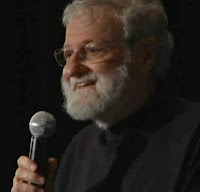

Don:

"You have to be true to yourself. Whether you are working as a lone designer designing chairs, or whether you're working as one of several hundred people on a team trying to (solve) some complex sustainability problem..., you have to be true to yourself. Even if you're one voice of many. If everyone had this view, your one voice gets amplified."

Jon:

"It is the best time in history to be a (good) designer, by any metric..."

Don:

"It is a great time to be a designer, because the technology world is changing rapidly in exciting ways which gives all sorts of wonderful potential. ...it is quite often that when there are economic difficulties, the exciting ideas get started."

"Don't try to be the great name designer. The total number of great name designers will always be just a handful. We need a great many designers; we don't need star designers. A star designer is a nuisance rather than a virtue."

-------


The full ~2-hour video:


---

Thanks much to Kathleen Watson, Associate Online Director of AAU's School of Web Design & New Media, who asked me to put together a session of this nature for AAU, and to Lourdes Livingston, Graduate Director of the same school. Thanks also to Susan Wolfe for the first photo appearing in this blog entry; all other still images were taken from the video.


We are planning to do more sessions of this nature at AAU during 2012. To learn of these sessions, follow me on Twitter.

Thursday, March 10, 2011

Impact of the role of the Chief Customer Officer

Back in May of 2005, I wrote about the role of the Chief Experience Officer, beginning with Challis Hodge's 2001 description of the role (as first held by Marc Rettig) and culminating in Jeffrey Rapport's 2005 advocation of the creation of the role in modern companies. In mid-2007, I updated the story, describing additional advocations of the creation of the role, a conference panel discussion I led of the pros and cons of the role, and the 2007 highly-publicized hiring of a Chief Experience Officer by Cleveland Clinic.

Forrester Research's initial advocation of the creation of the role in 2006 referred to it as a CC/EO -- a Chief Customer/Experience Officer. Subsequently, the word "Experience" in the title lost favor, and creation of the role of the Chief Customer Officer has taken off. There is even a (somewhat dated) book available about the role and a member-led advisory network of CCO peers.

Who is filling these roles? According to Forrester's Paul Hagan:
"The majority are internal hires who have a significant history at their companies: median time at their firms among those we studied is nearly eight years. A third of the CCOs previously held division president or general manager roles, and almost as many worked in a marketing and/or sales position. On the flip side, about one-fourth of these CCOs formerly held operations positions."
As noted by Samantha Starmer in UX Magazine, UX people are not the ones getting these newly created C-level positions. Plus, all sorts of departments are expected to be scrambling to play a major role in customer experience (CX) moving forward. This has prompted Samantha to warn:
"Given the current power of CX at the C-level, UX practitioners must step up our game, otherwise we will lose progress we have made to be more deeply involved in strategy beyond just performing usability services. We need to act now to be part of the broader CX solution. If we don't proactively collaborate across divisions and organizational structures, we will be stuck playing in the corner by ourselves. If we don't figure out how to manage partnerships with other departments in a collaborative, creative, customer focused way, the discipline of UX as we know it is at risk. CX management will take over."
In her article, Samantha emphasizes the need for UX to partner with marketing, an entity with which UX has had a strained history. Such partnerships have the potential to work wonderfully well, as suggested by the successful merger of user experience research and market research to form a Customer Insights organization a few years ago at Yahoo! (see "User (experience) research, design research, usability research, market research, ..." and "Why Designers Sometimes Make Me Cringe").

Partnership with organizations other than marketing is also important. Successful examples, led by UX, include those described by Secil Watson in "The Business of Customer Experience: Lessons Learned at Wells Fargo" and me (and others) in "Improving the Design of Business and Interactive System Concepts in a Digital Business Consultancy" and "Perturbing the ecosystem via intensive, rapid, cross-disciplinary collaboration."

How do you partner successfully? Genuine collaboration is a key, and the keys to collaboration are many, as I've addressed in past blog entries. See, for example:
Learning about other organizations' needs, goals, ways of working, etc. is also key. Take a look at what Misha Vaughn did to enable UX to impact and be appreciated by Oracle's sales force.

All of this and more -- e.g., getting UX moved from a cost center to an investment center (Brandon Schauer, MX 2011) -- may be essential to ensuring UX plays a vital role in the ballooning world of CX and CX management and to getting UX management personnel recognized as among the stronger candidates to fill the CCO role.

---
For more, see "Audio and slides for 'Moving UX into a position of corporate influence: Whose advice really works?'", "Ownership of the user-customer experience," and "Where should 'User Experience' be positioned in your company?".

Sunday, October 11, 2009

Interactions and relationships

For the Mx (Managing Experience) 2008 conference, I was asked to do a session that addressed the everyday reality that managers of user experience live in, to reflect on that reality, and to share some approaches and ideas for that reality. I decided to focus largely on some of the interactions and relationships that comprise that everyday reality, but particularly those by managers intent on enabling experience research and design to play a strategic role in their companies. I entitled, the presentation, "Interactions and Relationships."

A description of this presentation can be found in my April 2008 posting entitled, "Realities, dilemmas, framings, ..." Here I provide the slides I used, which are rich with provocative insights. Since I've been asked for these slides a lot...


The first 9 slides accompanied introductory remarks that set the context for the presentation. A particularly important slide includes a collage of photos of the managers and executives who made guest appearances at a multi-week course I taught just prior to Mx '08 entitled, "User Experience Managers and Executives Speak." The course was wonderful, as reflected in the glowing course evaluations, and I decided to provide some of my guest speakers with a bigger stage via my Mx '08 presentation.

Slides 10 through 32 were borrowed from my presentation at a little conference in Rome called, "HCI Educators 2008." These slides address challenges experienced by management and non-management experience design practitioners, and you'll find several slides present words of relevance to these challenges from the guest speakers of my course.

The final 33 slides present even more words from the guest speakers -- words of relevance to examples of the ways these managers and executives have framed such challenges in order to address them. Attendees were asked to consider whether such framings would be beneficial in the companies for which they worked.

Enjoy the slides. And my hearty thanks to the managers/executives who "joined me on stage" both during Mx 08 and my course: Jeremy Ashley, Lisa Anderson, Klaus Kaasgaard, Jim Nieters, John Armitage, Christi Zuber, and Jeff Herman.

P.S. The slides AND AUDIO are once again accessible for a related conference session: "Moving UX into a position of corporate influence: Whose advice really works?"

Saturday, October 10, 2009

Organizational and market maturity

Jon Kolko and I have been discussing whether the pace of corporate adoption and acceptance of comprehensive and strategic designer participation in business has been increasing. Look for a portion of that discussion in a piece we'll be calling something like "On designers as catalytic agents..." to appear in interactions cafe, our conclusion to the January+February 2010 issue of interactions magazine.

While we were having that discussion, Charles Kreitzberg kicked off a short discussion in IxDA's discussion list on what you need to say to a CEO to convince him or her of the need for "user experience design" in a company. As if all it takes is the right collection of words...

A response to Charles suggested that the maturity of the market the company is in is likely to impact the effectiveness of such a collection of words. And though Jon and I were talking about designer participation in a broader sense -- i.e., beyond user experience design, we discussed the concept of market maturity as well as corporate maturity, both of which have been addressed in numerous discussions over the years and for which numerous scales have been delineated. Since many may not be familiar with those scales, I thought I'd point to a few here.

Actually, I've pointed to a couple already in this blog. In "Developing user-centered tools for strategic business planning," I pointed to Jess McMullin's 2005 "design maturity continuum." Jess updated it a tad in December of 2008 and published the image of this version that appears nearby (click to enlarge). In his December 2008 post, Jess points out that his design maturity continuum is actually additive -- each higher level represents the addition of greater responsibility and scope for design.

Most other corporate scales I've seen are not additive but instead describe different stages organizations (or parts thereof) pass through. The first scales of this nature that I ever saw came from IBM Consulting in the early- to mid-90s and were used to rate the "usability management maturity" of their clients. Two of IBM's several scales, which appeared in little blue books they'd give to their clients, appear below:

HCI Resources
  1. Little or no investment in qualified people, prototype/simulation tools, equipment, and/or usability evaluation facilities.
  2. Some qualified people are available. There is limited availability of tools and equipment. A usability evaluation facility is available.
  3. Sufficient investment made in qualified people/tools. Budget for user involvement exists.
  4. Resources are applied effectively at proper stages and levels of the development process.
  5. HCI resources are fundamental to the development process and considered essential in planning product costs.
Integrated Design
  1. Various aspects of the design (panels, helps, pubs, installation, etc.) are designed separately or added late in the cycle.
  2. The need for interdisciplinary design teams is recognized, but efforts are uncoordinated.
  3. Plans for integrated design exist and are executed on a selective basis.
  4. Integrated design teams are normally established. Teams are effective in improving overall usability.
  5. All aspects of design evolve equally and in parallel. Designs provide users with solutions to needs.
In a 1994 book chapter, Kate Ehrlich and Janice Rohn delineated four stages of organizational acceptance of user-centered design. They are described in the table below (click to enlarge) which I took from Timo Jokela's 2001 dissertation.


Variations and extensions of this have appeared in a couple of international "standards," including the 1998 "ISO/DIS 13407 Human Centred Design for Interactive Systems":
0. Need unrecognized
1. Need recognized
2. Considered & encouraged
3. Implemented
4. Integrated
5. Institutionalized
Jakob Nielsen's 2006 version of such a scale -- which I've discussed in two earlier blog entries, including "Changing the pace or course of a large ship" -- combines elements found in all the above scales:
Stage 1: Hostility toward usability
Stage 2: Developer-centered usability
Stage 3: Skunkworks usability
Stage 4: Dedicated usability budget
Stage 5: Managed usability
Stage 6: Systematic usability process
Stage 7: Integrated user-centered design
Stage 8: User-driven corporation
(See "Corporate Usability Maturity: Stages 1-4 and Stages 5-8.")

Other such scales -- older and newer -- exist, but they look a lot alike though they tend to not be accompanied by references to any of the others. One of the more recent examples of these is Forrester's five levels of customer experience maturity, shown nearby via an image from a Bruce Temkin July 2009 blog posting.

Have you found any of these types of scales to be of help to you in places at which you have worked? Have you observed any corporate progressions not addressed in the scales described here that you think should be captured in a scale? (I can think of a couple.)

As for market maturity, the example referenced in the IxDA list discussion should suffice -- the four stages delineated by Jared Spool earlier this year (see "Deriving Design Strategy from Market Maturity: Part 1 and Part 2"):
  1. The Technology is Worth the Pain (such as "when a new product category emerges," there are "no competitors or the users have no choice")
  2. Building Out the Features (which usually happens "once a competitor joins you in a category" in order to catch up)
  3. Focus on the Experience (when "customers stop focusing on new features and start asking for simplicity")
  4. Supporting a Commodity (when "the things we're designing are embedded into bigger experiences")
Do such stages of market maturity trump the delineated stages of organizational maturity? Not at all, but they intersect. Consider both when trying to figure out what needs to be done for designers to be more effective and/or to expand their role in a company.

Saturday, February 21, 2009

Want to increase the strategic relevance of User Experience within your company?

Would you like guidance from a panel of industry experts on how to increase the strategic relevance of User Experience within your company?

Please tell us about the situation where you work and how we can help via responding to a short questionnaire.

With your permission, we might discuss it during our panel session at CHI 2009 in Boston (see "Figuring out the 'one thing' that will move UX into a position of strategic relevance" for more info).

Wednesday, February 18, 2009

User (experience) research, design research, usability research, market research, ...

A version of this post was published in UX Magazine.

I rather miss heading up a user research practice and managing and supporting user research personnel. Recently, I nearly accepted a position heading up a highly-respected user research consultancy looking to take things to the next level.

But should such a practice or offering be referred to as "user research" these days. The term is still in use (though the word "experience" often lies in the middle), but the word "user" can imply a much narrower conception of the practice than often intended. As I described in a much earlier blog entry, that was true when I was Director of User Research at Studio Archetype and Sapient; there, the label did not always communicate that we did more than only research of "users" and "use." And a recent conversation I had with an ethnographer who wanted to better understand "user research," something she said she did not do, revealed such preconceptions still exist even within the applied research community. (Use of ethnographic research methods was a big part of the "user research" we did at Studio Archetype and Sapient.)

In short, it is not always clear what label is best to apply to such a practice or consultancy. It is also not always clear what its ideal scope or focus should be or should become.

Lots of people conduct "usability research" these days, but the methods and approaches often used have lagged behind major changes that have occurred in the world of computing. In "Is usability obsolete?" -- an article we will be publishing in the May+June 2009 issue of interactions magazine, Katie Minardo Scott argues:
"Current usability work is a relic of the 1990’s: an artifact of an earlier computer ecosystem, out of step with contemporary computing realities. Usability can no longer keep up with computing: the products are too complex, too pervasive, and too easy to build. And in our absence, users and engineers are beginning to take over the design process. These trends demonstrate the growing gap between usability theory and commercial practice – the “new realities” of computing haven’t been truly embraced by the usability community. The trends are, at a minimum, making traditional usability more difficult, if not irrelevant in the new paradigm."
The label "design research" is used more and more these days. But when Yahoo! abandoned the label "user experience research" for "design research" two or three years ago, previous efforts -- some of which had been mine when I was in a management role at Yahoo! -- to involve user experience research in the early stages of product and service ideation and conception were undercut. As described by Yahoo!'s Klaus Kaasgaard, guest speaker during a user experience management course I taught last spring, the new label made people think that the research was only relevant to the later "design" phase of the product development process.

The narrow interpretations of the label "user research" at Studio Archetype and Sapient prompted us to extend the label to "user research and experience strategy." The narrow interpretations of the label "design research" at Yahoo! led Klaus to change the label back to "user experience research." But a much more significant change was made at Yahoo! more recently: a merger of the user experience research group and the market research group, yielding an organization named, "Customer Insights."

When I was in a management role at Yahoo!, we discovered that market researchers were encountering some of the same obstacles as our user experience researchers -- obstacles to being appropriately involved upstream in the process so to have a more beneficial impact on the company. So, we began to partner with market research in an effort to attain that involvement. During his guest appearance at my "User Experience Managers and Executives Speak" course, Klaus, now VP of Customer Insights at Yahoo!, spoke at length about the similarities and differences among goals and challenges faced by market researchers and user experience researchers, and about how important the merger has been to achieving such a strategic role. In an excellent article in UX magazine (Volume 7, Issue 2, 2008), Robin Beers paints a similar portrait regarding bringing together the market research and user research teams under the umbrella of Customer Experience Research & Design at Wells Fargo.

Is such a "coming together" of these two disciplines appropriate for every company? No, as implied by eBay's decision to split them up after they attempted to bring them together. There are multiple factors to consider when determining what is best for a particular company. But it is important to understand that great benefit can be achieved when the two work together.

In an October 2008 contribution to Jakob Nielsen's Alertbox, Christian Rohrer provides a mapping of a wide range of research methods, some typically thought of as "market research" methods, that can help you to better understand their similarities and differences.

In the November+December 2008 issue of interactions magazine, Liz Sanders provides different insight via her map of "design research" (see the map below right), which you can click to enlarge). Here is how Liz describes the map's organization:
The design research map is defined and described by two intersecting dimensions. One is defined by approach and the other is defined by mind-set. Approaches to design research have come from a research-led perspective (shown at the bottom of the map) and from a design-led perspective (shown at the top of the map). The research-led perspective has the longest history and has been driven by applied psychologists, anthropologists, sociologists and engineers. The design-led perspective, on the other hand, has come into view more recently.

There are two opposing mindsets evident in the practice of design research today. The left side of the map describes a culture characterized by an expert mind-set. Design researchers here are involved with designing FOR people. These design researchers consider themselves to be the experts and they see and refer to people as “subjects”, users”, “consumers”, etc. The right side of the map describes a culture characterized by a participatory mind-set. Design researchers on this side design WITH people. They see the people as the true experts in domains of experience such as living, learning, working, etc. Design researchers who have a participatory mind-set value people as co-creators in the design process. It is difficult for many people to move from the left to the right side of the map (or vice versa) as this shift entails a significant cultural change."
Yet another map of methods was developed during the Netherlands Design Institute's Presence project during the late '90s. The image to the left (click to enlarge) shows the map, which requires a legend in order to identify which method lies where. In this image, the location of "rapid ethnography" is revealed, along with helpful information about the method regarding required expertise, time, staffing, and cost. (This "methods lab" used to be online, but I am now able to find it only in the 1999 book, "PRESENCE: New Media for Older People.")

The ratings in the above image remind me of ratings developed by Luke Hohmann for individual "innovation games" -- a variety of research methods employing collaborative play. (See image at right for his ratings for a game called Speed Boat, and see "What is holding User Experience back or propelling User Experience forward where you work?" for a sense of what that game is about.)

Sunday, December 21, 2008

Beneficial, ubiquitous interactivity

Earlier this month, I dropped by an exhibition of masters student projects from the "Theory and Practice of Tangible User Interfaces" course at UC Berkeley. While waiting for the exhibition to open, Liz Goodman, teaching assistant for the course (that is her to the right side of instructor Kimiko Ryokai in a photo from the San Franciso Chronicle) told me about students' desire in this kind of course to take on projects of great importance, though such projects are often very difficult to figure out. Liz's words reminded me of some of Jon Kolko's words from our September+October 2008 edition of interactions cafe (in interactions magazine) entitled, "On Addressing Wicked Problems...":
"When I used to teach, my students would become enamored with the possibilities of design, and would make grandiose, and unintentionally trivializing statements like 'World hunger? It's just a design problem; we could solve it, if only we had the right model...'"
According to Liz, the challenging project of greatest popularity this year involved monitoring home energy use. However, only one group of students stuck with such a project, creating a demo of an energy monitoring system interface via which residents of an apartment building could see how much energy is being used in different apartments. The visual display showing energy use by apartment -- to be placed in a common space of an apartment building -- did not reveal the identity of any apartment unless an apartment resident approached with a device which enabled the display to identify only his or her own apartment. The student designers wondered whether multiple residents would take the opportunity to approach the interface simultaneously to discuss their relative energy use and what might be done to lower it and that of others.

(Two energy monitors for use inside a home were among products already on the market reviewed by James Pierce and David Roedl in "Changing Energy Use Through Design," the cover story of our July+August 2008 issue of interactions magazine. One of them is the Wattson home energy monitor pictured at left, which, among other things, enables people to be peripherally aware of their energy usage via the color and pulse of its mood light. "The novelty of this ambient energy awareness may stimulate reflection, behavioral change, and conversation.")

The foci of the other UC Berkeley student projects were very different, ranging from digital shadows of personal information that follow people around to cafe table surfaces that remember and remind you of how you make use of them. A mockup of a system via which students can unobtrusively communicate their views of the appropriateness of the pace of a class to its instructor reminded me of a system developed by Eric Paulos via which conference attendees can use their cell phones to communicate their presence or absence in the conference hall, how they are feeling, or their vote on an issue raised by a speaker; for both systems, the individual communications impact a display visible to all attendees, such as the display of attendees pictured at the right.

Eric's system was used during the Interactive City Summit held in San Francisco during 2006, an event that critically examined the rhetoric comprising "a future vision filled with beautiful, delicious urban technologies that will sooth the souls of our communities, generate playful neo-geo-landscapes, and celebrate our omni-connected harmony." The summit immediately preceded "a global festival of art on the edge" a few miles south of San Francisco in San Jose, where just a week and a half ago was unveiled a large piece of art consisting of thousands of LED lights that change color and pulse and pattern in response to codes communicated via the phone of anyone who chooses to call. The artwork, called "Show your Stripes," occupies the surface of the outside of a high-rise building.

Will "Show your Stripes" sooth the souls of the San Jose community?

An interactive light installation in the U.K. perhaps achieved this type of goal and other important goals much more. From "Dancing in the Streets" (interactions, May+June 2008):
"How do you transform a city center at night to enhance the experience of residents and visitors and to combat the public's fears over safety and security at night?

This challenge was set by York City Council’s ‘Renaissance Project: Illuminating York’, and we took them up on it. We made it our goal to get pedestirans to engage with our interactive light installation, and to get them dancing without even realizing it.

People out shopping or on their way to restaurants and nightclubs found themselves followed by ghostly footprints, chased by brightly-colored butterflies, playing football with balls of light, or linked together by a ‘cat’s cradle’ of colored lines. As they moved within the light projections, participants found that they were literally dancing in the streets!"
A video of this dancing is available on the interactions website. And you can read more and watch a video about some of the UC Berkeley student projects in an online San Francisco Chronicle story entitled, "Tangible fun at UC Berkeley's virtual projects."

(Note that according to Liz, one of guest speakers during the UC Berkeley course was her husband, Mike Kuniavsky, whose presentation in class was based on an article of his entitled, "User Experience Design for Ubiquitous Computing" from the November+December 2008 issue of -- you guessed it -- interactions magazine.)

Thursday, December 11, 2008

Applying "design thinking" to, um, design

"The Omnibox is really great; thanks for coming up with that" said my friend Pam from Tuesday evening's BayCHI audience. "But what's up with the tabs? I've watched numerous people be confused by and just ignore them. Do people really use them?"

Pam, unknowingly sitting immediately behind the Firefox design team (Firefox also uses the tabs metaphor), was asking this of Google's Glen Murphy, who had just described the process of designing Google Chrome -- Google's new browser -- to a near capacity audience at PARC. Much of his description had been focused on the meticulous process of designing Chrome's tabs. But why tabs? Glen had said that the team had settled on use of the tab metaphor very quickly, emphasizing that it just seemed right to everybody. What other options were explored and considered?

Glen had repeatedly stressed the value of user research during the design process, saying that he couldn't overstate the importance of the many "cognitive walkthroughs, lab usability tests, and longitudinal studies" that were conducted. But did the team generate and seriously explore and test many concepts other than tabs?

Doing so is often an important part of a good design process, certainly one of relevance to the design of Google Chrome. Indeed, it reflects an application of "design thinking," something I've written about in previous posts (e.g., "Crummy innovation") and in interactions magazine (e.g., "On Addressing Wicked Problems..."). Business professionals are hearing lots these days about the importance of applying design thinking to business decision making -- a process typically dominated by analytical thinking.

But another good time to apply design thinking is, um, during product design.

Note that I'm certainly NOT claiming that it wasn't applied during the design of Google Chrome. For all I know, lots of concepts other than tabs were generated and explored. I should have asked. But I do know that the generation and exploration of multiple design concepts happens much too little in many engineering-centric companies.

I did ask a question of Glen. However, my question focused on the role product management played during this project. Glen had stated that the Chrome team was comprised of people from engineering, user experience, and product management (though he was not permitted to reveal how many from each). Glen had also stressed the importance of the close relationship that was maintained among engineers, designers, and users throughout the project (see his slide to the right); for example, the engineers observed every user study conducted by user research personnel -- something which is, indeed, probably still far from the norm. I wanted to know what product management was doing during the project, since it didn't appear to be represented in that important slide (though I would tend to want to see it there).

Glen had also emphasized the importance of the interchangeability of roles at Google, saying this was his first project in the role of designer at Google, having been in the role of engineer on previous projects. According to Glen, this interchangeability facilitated the important closeness of the relationship between designers and engineers.

But one can be in the role of designer without extensively applying "design thinking," which, again, I say WITHOUT implying that was true in this case. But when it is true or is likely to be true, there are things that can be done to increase its application.

At the recent CanUX workshop (which I didn't attend), Jerome Ryckborst presented an approach he developed for use in the company at which he works. Here is what Jerome said about this on the Vancouver User Experience discussion list in September:
"Over a year ago, our CTO decided we would not hire a designer to support our 100 software developers, and declared that the UI was ultimately the responsibility of developers. The problem I saw with this: developers untrained in design believe they're designing their software, but they actually aren't doing things that designers would recognise as design activities. I took this as a challenge because I didn't want Usability to be the mop-and-bucket brigade at the end of the development process. I set out to improve the outcomes of our developers' design efforts. ... With the help of my colleagues and the ideas of various experts, we assembled, tested, and refined an ideation-design process specifically for software developers.

You, too, can learn and use this process."
Jerome's CanUX 2008 slides, which describe his process quite nicely, are presently accessible on the CanUX 2008 homepage. Labeled "Five-Sketches-or-Else," the process consists of a series of activities (some of which are iterated) which facilitate the generation and exploration of design concepts, preventing settling on a single concept much too quickly.

Also at CanUX 2008, Brandon Shauer talked about the sketchboarding technique I referenced recently in "Prototyping for tiny fingers." It, too, facilitates the generation and exploration of design concepts.

And there are other approaches that can be taken, some of which I've described in previous blog entries and where the best choice of an approach can depend on a variety of factors. But common to these approaches is facilitation of the approaches by "UX" personnel. As I've argued often (see, for example, "Soft skills"), UX personnel need to be able to play the role of facilitator of a good research and design process involving non-UX personnel as much as if not more so than doing the research and/or design themselves.

Is "design thinking" being applied during the product (or service) design process where you work? If you need some help with this, give me a holler.

Wednesday, November 19, 2008

Prototyping for tiny fingers

Knowing I will never again use any of the papers, books, magazines, etc. that sit in several boxes I have stored in the basement, I decided that the time had come to get rid of them all.

However, I made the mistake of looking inside the boxes.

Ah, a couple dozen unused Group Embedded Figures Tests. Ooh -- those are cool. Hmm... you never know when I'll need to find out the relative field dependence-independence of a group of guests. It might provide critical guidance regarding how to set the dinner table and seat people around it.

Just before dinner, those guests -- or just the field dependent among them -- might want to leaf through the dozens of old Gourmet magazines I have, if I were to dust them all off a bit. The field independent guests might prefer that Theory of Matrices textbook from my undergraduate days, or perhaps Introduction to Computer Organization and Data Structures: PDP-11 Edition.

During dinner, I might want to do a reading from the article I co-authored that appeared in Journal of Educational Measurement many years ago. All those reprints in the basement, which I'd be happy to sign, could make unforgettable thank-you gifts.

That proposal for additional design and evaluation work for LAWS (a Legal Agreement Writing System) that I worked on for Pacific Bell during the 80s might be just what I need to take a look at again someday. And the code for that PLATO-based "confidence testing" system that I redesigned even earlier during my career... -- well, I'm sure I would think of a good use for that right after I discarded it.

But what is this? Ugh -- a box of old issues of Communications of the ACM. Finally something I should be able to discard; nothing could be in them that I'd ever be interested in reading again (or, more likely, for the first time). But wait -- post-its protrude from the top of a few of them. Might there actually be something of remaining value in some of them, such as in this issue dated April 1994? Sure enough, the answer: "yes" (though a far more genuine "yes" than applicable to any of the items mentioned above).

The marked article: "Prototyping for Tiny Fingers," an article about the value of low-fidelity (paper) prototypes, and how to build and test them. Though published in 1994, this is still an excellent article, and is among the articles on paper prototyping that I provided to user experience personnel who worked for me at Yahoo! as recently as 4 years ago. They adopted and adapted the approach to great benefit, generating good, new designs much more quickly (though much more intensely) and resolving old design problems that had long haunted them.

The article was written by my friend Marc Rettig, who was perhaps the first Chief Experience Officer in the world (though years after he wrote this article). Yesterday, I decided to check in with Marc about the article. Here is what he had to say:
"It has been really surprising to see how long that piece has remained useful to people. I've often thought of it as a sort of indicator of just how much people want short, clear, egoless descriptions of ways of working that have power to make things better.

What would I change about it today? Hmmm.... Remember that it was written before the web. About '93 or so, I think. At the time, the new news in that column wasn't just using paper to make prototypes, it was the idea of prototyping at all. Of course people had been making prototypes since forever, but in the software world, it wasn't *really* happening very often. When it did, the prototype itself was usually an expensive piece of code.

So the industry was having a conversation about a shift from waterfall processes, from 'first specify, then build,' to a recognition that iteration is *necessary* for discovering the specifications. That you can NOT write complete specs without using attempts-to-build as a way to better understand both the problem and the solution, and the faster you do this the better. Damn cheeky claims back then.

I don't think that conversation is over, by the way. I think design and construction are still typically too separated. And our tools make it difficult to continue design into the construction effort. Once you see and experience the software or product, once you see it in use, you can usually see how to improve it. People are slapping themselves on the forehead in usability observation rooms around the world. 'Why didn't we see that before?!'

When you make paper prototypes, design and construction are mingled in a lovely useful way. And it's an activity that easily affords collaboration. Still the two strong points in its favor, IMHO."
I never understood Marc's title for this article, so I asked him to explain it:
"Why 'tiny fingers?' You know, I thought a lot more people would understand that reference. Maybe it says something about my childhood. To me, 'tiny fingers' is a cultural reference to books about "adult" topics made accessible for children. And if "tiny fingers" is in the title, chances are you're going to be doing some kind of activity. You're going to get out the scissors and paste. I thought I was writing a title that packaged two things that usually don't go together: a 'serious' topic like prototyping, and an invitation to playful craft as a way of working. Plus I can't bring myself to make titles (or even articles) that take themselves too seriously. There's way too much over-inflation in our literature, and remember this was CACM. I wish I could have called it, 'None of us really know what we are doing.'

I asked amazon and google about this, and see it's still happening a little:
  • Easy puzzles for tiny fingers
  • Kitten on the keys: Descriptive solo for tiny fingers (!)
  • Dude, you have tiny fingers
Okay, I made up that last one."
But, surely no one is doing much paper prototyping any longer, right? Not according to Nathan Moody and Darren David of Stimulant who design cutting edge, multi-touch natural user interfaces. At their IxDA-SF presentation last month ("Multi-Everything: Multi-touch and the NUI Paradigm"), both claimed they paper prototype extensively and have never found anyone who can iterate faster digitally.

Marc "tipped his hat" to Bill Buxton, who wrote the fabulous and recently-published book, "Sketching User Experiences: getting the design right and the right design." However, Bill distinguishes between sketches and prototypes, arguing that they serve different purposes and are used most at different stages of the design process -- the former for ideation, the latter for increasing usability. Regardless, paper is among the tools he advocates for both.

I encourage you to also take a look at Mark Baskinger's excellent cover story in the March+April 2008 issue of interactions magazine. The title: "Pencils Before Pixels: A Primer in Hand-Generated Sketching." You can download Mark's worksheets from the interactions magazine website.

And other lo-fi techniques have received recent attention, including Brandon Shauer's sketchboards for exploring and evaluating interaction concepts quickly.

Over the years, lo-fi prototyping has had more than its share of detractors. But, clearly, it lives on -- as it should.

However, it looks like it is going to be very hard to get rid of any of those boxes in my basement.

___

Years ago, Marc Rettig served as Features Editor for interactions magazine, though he tells me the opportunity he was given to play that role was less than minimal. Jon Kolko and I are giving him another opportunity, as we have recently added Marc and others to our team of contributing editors. More info on those additions and other changes will appear in interactions magazine and on the interactions website.

Tuesday, November 04, 2008

Crummy innovation

What is innovation that doesn't happen? "Crummy innovation," according to Roger Martin (at right in the photo), Dean of the Rotman School of Management at the University of Toronto.

Roger said this last evening during an on-stage conversation with Cheskin's Darrel Rhea (at left in the photo, sitting to Roger's right) hosted by the Commonwealth Club in San Francisco. Darrel had just said that the greatest innovations he had worked on during his career were never implemented, because the organizations that needed to implement them were too resistant to change. However, according to Roger, great innovations happen, because if they don't, you will never know whether they would have been great. "No new idea can be proven in advance," argued Roger. "Only the passage of time will prove whether an idea -- an innovation -- is great."

Hence, Roger argues that companies need to ban the use of two words when it comes to innovation: "prove it." If you can prove something in advance, it is not an innovation.

Additionally, Roger argues that a critical part of the innovation process that is often overlooked is the decision making process that determines whether an innovation will be implemented. It, too, must be designed.

Both pose great challenges.

In our most recent issue -- the November+December 2008 issue -- of interactions magazine, Nathan Shedroff (one of Darrel's co-authors of the book, Making Meaning: How Successful Businesses Deliver Meaningful Customer Experiences) describes several reasons why most organizations cannot innovate effectively (see "Design: A Better Path to Innovation"). Roger Martin has addressed this, also. For example, in my blog entry, "Preconceived notions," I wrote about Roger's presentation at the CONNECTING 07 World Design Congress:
"Roger Martin, whom I referenced extensively in 'Designing in hostile territory,' explained how the common notion that risk needs to be minimized for a business to be successful is a hindrance to innovation and development of competitive advantage."
Last evening, Roger touched on the importance of applying "design thinking" -- involving the use of abductive logic -- to the business decision making process, which is typically analytical involving the application of only deductive and inductive logic. And according to Roger, helping designers and MBAs understand the differences in the logic they have been taught to apply, and the value and role of all three, can increase the chances that innovation will not end up being "crummy."

There is much more that can be done, as I've described in past blog entries and addressed in courses, presentations, and consulting gigs. What needs to be done where you work so that your innovations don't end up being "crummy"? Do you need some help figuring this out?

And how should you approach the innovation process to increase the chances that it is not best for an innovation to end up being "crummy"? (The title of Nathan's article should suggest a good answer.)

___

Innovation receives a lot of attention in the November+December 2008 issue of interactions magazine. Nathan's excellent article appears in a section entitled, "Reflections on Innovation," which includes Steve Portigal's "Some Different Approaches to Making Stuff," Elizabeth Churchill's "Of Candied Herbs and Happy Babies: Seeking and Searching on Your Own Terms," Bill Tomlinson's "A Call for Pro-Environmental Conspicuous Consumption in the Online World," and Richard Pew's "An Exciting Interface Foray into Early Digital Music: The Kurzweil 250." Other articles also address innovation, particularly, and not surprisingly, those in a section entitled, "Emerging Approaches to Research and Design Practice." For example, Sus Lundgren describes tools via which to design innovative games in "Designing Games: Why and How," and Liz Sanders' "An Evolving Map of Design Practice and Design Research" makes reference to the most recent additions to that map.

We've addressed innovation in each of our previous issues of interactions magazine (the preceding 5 issues of 2008), and we'll no doubt do so in each upcoming issue. Indeed, look for an article from Roger Martin in an upcoming issue.

Some of the blog entries in which I address innovation can be accessed here.